
You Can Do Hard Things: From Panic Attack to Keynote Speech
- Jan 11, 2025
- 3 min read

On Friday, I was invited to deliver a keynote speech to the AP Capstone students at Blake High School—about 150 students in all. Public speaking is something I’ve done many times before, but this day was different. On the way to the school, I began to feel nauseous. Each passing traffic light intensified the feeling. My body started to shake, I grew light-headed, and a sinking wave of dread took over. I had to ask my mom to pull over, convinced I was about to vomit. Instead, I broke into tears, overwhelmed by the thought: “I can’t do this speech. I need to cancel.”
I was having a panic attack.
Why? Why this time? Why was this moment different?
I’ve been giving speeches for years. I’ve been managing anxiety and panic attacks for even longer—since I was 14, nearly a decade ago. But the truth is, no matter how much experience or growth you have, anxiety and mental illness don’t just vanish. You can learn tools to manage them, but they don’t simply go away. Recently, I’d switched medications in hopes of finding a better balance, a more fulfilling life. But in that moment, the adjustment was clearly making me feel everything too much.
Thankfully, my mom was patient and understanding. I took the time I needed to calm down, gather myself, and remind myself that I could do this. Even though I arrived at Blake High School later than I’d hoped, my tendency to leave early (a habit born of my anxiety) meant I was still there ahead of schedule.
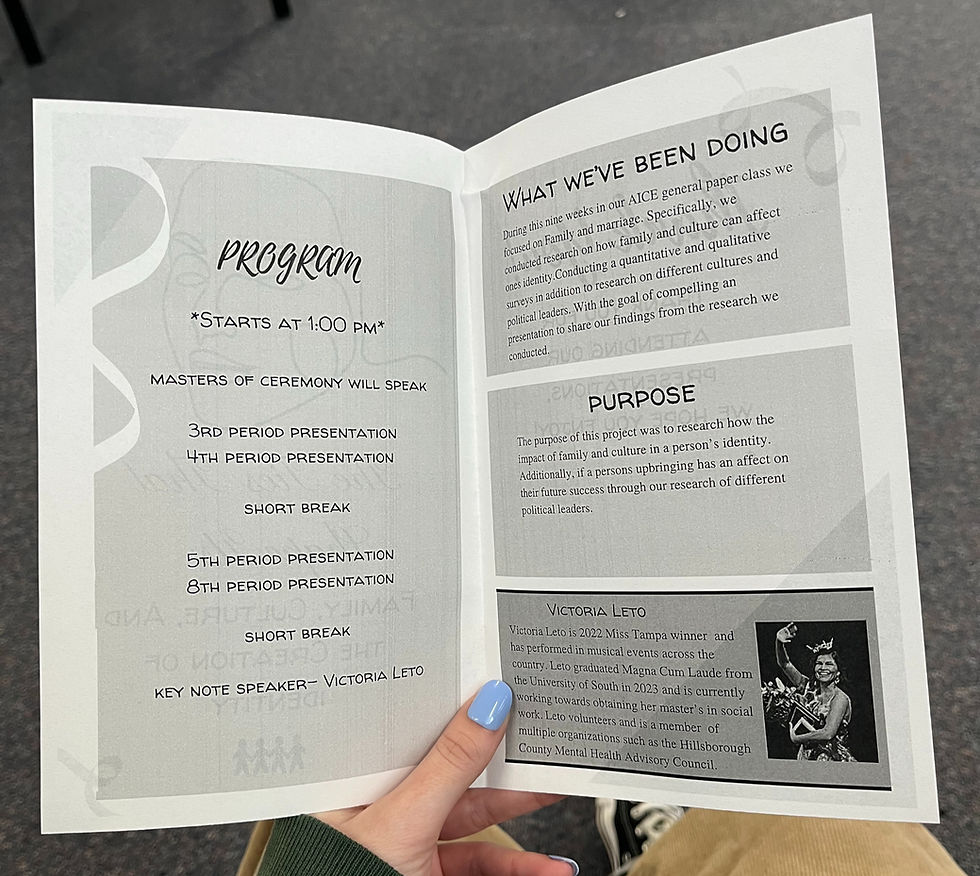
Once I stepped in front of the students, I gave my presentation about cultural identity and my journey with mental health. (READ THE SPEECH HERE) I was open and honest about my struggles, weaving them into my broader message. As I spoke, I could feel the connection forming with the students. I was proud of what I shared, but I could never have predicted what would happen after.
When I finished, the response was overwhelming. The teacher presented me with flowers and a handwritten card. Even more touching, he handed me a collection of cards representing over 150 student signatures and gratitude—a gesture that brought tears to my eyes. As some students left for dismissal, a line formed to speak with me.

Over a dozen students stood waiting, many with tears in their eyes. They thanked me for my words, for my honesty, for being real about my mental health journey. Some asked me questions about my experience, and some shared their own struggles. They told me how much my speech meant to them and how I seemingly delivered it with ease, and I told them the truth: "I had a panic attack in the car on the way here. I still struggle. But I’m here to show you that you can overcome it. You can do hard things."
That moment will stay with me forever. The courage and openness of these students were extraordinary. Their appreciation touched me deeply, but their stories also reminded me of an urgent truth: our students are struggling.
We are facing a severe mental health crisis among our youth, and it’s up to all of us to act. We cannot wait for crises to happen; we must work on prevention. Resilience, emotional intelligence education, and empowerment are critical tools for addressing this epidemic. Suicide is preventable, but prevention requires systemic change. It requires us to prioritize mental health education and to foster environments where students feel safe, heard, and valued.
That day at Blake High School, I was reminded of why I do what I do. I want to be a voice of encouragement, a reminder that even in the depths of anxiety, there is strength and hope. And I want to challenge everyone to step up for our students—to listen, to care, to act. They need us, and they need us now.
To do my part, I advocate for mental health awareness, deliver keynote speeches, and offer affordable youth mentorship as preventative measures to address mental health challenges. If there is a way you would like to partner to bring about greater awareness and support for youth, please contact me via email ToriLeto@BrighterTimesCan.org. If your child could benefit from mentorship, learn more here.


Comments